

 Safety Netting
  Barrier Netting
  Loading Dock Safety Nets
  Facility & Warehouse Safety
  Construction Safety Catalog
  Debris Netting Panels
  Fall Safety Netting
  Steel Netting
  Kevlar Reinforced Netting
  Conveyor Netting
  Drone Safety Netting
  Spectator Safety Products
  Transportation Safety Netting
  Plastic Fence
  Cargo Nets
  1" Webbing Cargo Net
  2" Webbing Cargo Net
  Custom Cargo Netting
  Cargo Netting Roll
  Military Grade Cargo Lifting Net
  Decorative Rope Cargo Net
  Truck Cargo Net
  Truck Cargo Net Kit
  Rope Cargo Net
  Steel Cargo Net
  Kevlar Reinforced Cargo Net
  Jumbo Lifting Nets
  Warehouse Cart Netting
  Pallet Rack Netting
  Debris Net Rolls
  Loading Dock Solutions
  Wall Mounted Loading Dock Nets
  Above-Ground Loading Dock Safety Nets
  In Ground Loading Dock Nets
  Existing Bollard Safety Nets™
  Construction Netting and Mesh
  Debris Netting Panels
  Fall Safety Netting
  Debris Netting Rolls
  Hatch Safety Netting
  Safety Barrier Netting
  Warehouse Safety Netting
  Hatch Netting
  Rack Safety Netting
  Loading Dock Solutions
  Military Netting
  Plastic Netting
  All Purpose Nets
  Barrier Netting
  Custom Barrier Netting
  EZ Barrier
  Knotless & Knotted Barrier Netting
  Sports Barrier Netting
  Warehouse & Dock Safety Barriers
  Pallet Rack Barrier Netting
  Sports Netting
  Custom Sports Netting
  Golf Netting, Barriers & Cages
  Baseball Netting & Cages
  Spectator Safety Products
  Camouflage Nets
  Drone Netting
  Gym Divider Curtains
  Lacrosse Backstops
  Agricultural & Pest Control Netting
  Shade Cloth
  Trellis Netting
  Crop Protection & Blueberry Netting
  Bird Netting
  Pond Netting
  Pest Control
  Poultry Netting
  Shade Cloth
  Square / Rectangular Shade Cloth
  Triangular Shade Cloth
  Metal Netting
  Steel Cable Netting
  Decorative Steel Netting
  Steel Chain Netting
  Conveyor Netting
  Light Duty Conveyor Netting
  Heavy Duty Conveyor Netting
  Heavy Duty Conveyor Netting w/ Debris Liner
  Plastic Fence Netting
  Multi-Use Plastic Fence
  Safety Barrier Fence
  Containment Netting
  Deer Fence
  Plastic Elk Fence
  Plastic Agricultural Netting
  Plastic Pallet Rack Netting
  Plastic Bird Netting
  Plastic Poultry Netting
  Plastic Snow Fence
You need to know how to choose the right material for your golf netting. You'll want to consider the climate, whether you'll be using it indoors or outdoors, and how much traffic the netting will see. You'll also need to decide on the type of netting, either nylon or polyethylene, and the thickness of the thread. With so many options available, it can be hard to know where to start. That's why we've put together this informational guide to help you make the best decision for your needs!
Golf Netting for your application
Golf netting is an important piece of equipment for any golfer. There are different types of golf netting designed for different applications, whether you're using it indoors or outdoors. In this guide, we'll discuss the two most common applications of golf netting, driving range and cage netting.
Driving range netting is a type of golf netting that is typically used outdoors. It is designed to catch golf balls that are hit off of the tee, before they can cause any damage. This is the type of netting you would use to be able see how far your ball is going, or for public outings. Driving range netting is available in different sizes and thicknesses, so you can choose the one that best suits your needs.
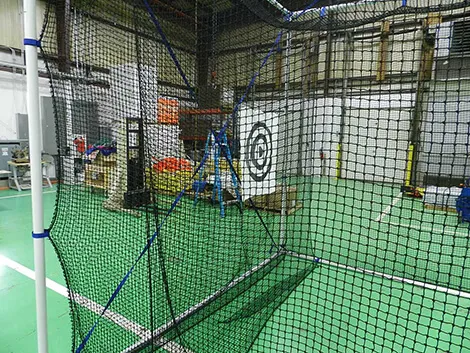
Cage netting is another type of golf netting that is typically used indoors. It is designed to catch golf balls that are hit into the cage, before they can cause any damage. This is the type of netting you would use to keep your golf balls from bouncing all over the room. This design uses PVC pipe to build a cage that utilizes a back drop to stop the momentum of a ball.

So, which type of material should you choose?
There are a few different types of materials that you can use for your golf netting. The most popular materials are nylon and polyethylene, but there are also a few other materials available. Nylon netting is the most common type of netting and it is available in a variety of thicknesses. It is typically used for outdoor applications, such as driving range netting. Polyethylene netting is also a common type of netting and it is available in a variety of thicknesses. It is typically used for indoor applications, such as cage netting. There are also a few other materials available, such as PVC and steel. So, how do you know which material is right for you? There is also psi (pounds per square inch), and years of use to take in account.
If we are talking about strength, when comparing nylon and polyethylene, Nylon is stronger. Nylon has a tensile strength of 12,400 psi. Polyethylene, however, even in its three most common types – low, high, and ultra-high molecular density – ranges from 1,800 to 3,100 psi.
When it comes to years of use there are a few different factors. For polyethylene we will look at two different variations. The first is Economy Series golf netting, which is designed to last five to seven years. The second is Pro Series golf netting, which is designed to last seven to ten years. When it comes to nylon there is Premium Series golf netting lasting ten to fourteen years.
A little more to help you choose.
The best way to decide which material is right for you is to consider the climate and the application. Another thing to consider is how much traffic the netting will see. Nylon netting can withstand more traffic than polyethylene netting, so if you're expecting a lot of use, then nylon might be a better option. A big factor to take into consideration is the sun and weather.
Polyethylene
- Very low water absorption
- Good resistance to climatic changes
- It lasts longer
- Tensile strength is medium, and it was not designed for load-bearing applications
Nylon
- High tensile strength
- High resistance to solar incidence and abrasion by friction
- Ideal for exteriors
- Higher water absorption level than other materials
Click here for a more in depth detail of Polyethylene Vs Nylon.