

 Safety Netting
  Barrier Netting
  Loading Dock Safety Nets
  Facility & Warehouse Safety
  Construction Safety Catalog
  Debris Netting Panels
  Fall Safety Netting
  Steel Netting
  Kevlar Reinforced Netting
  Conveyor Netting
  Drone Safety Netting
  Spectator Safety Products
  Transportation Safety Netting
  Plastic Fence
  Cargo Nets
  1" Webbing Cargo Net
  2" Webbing Cargo Net
  Custom Cargo Netting
  Cargo Netting Roll
  Military Grade Cargo Lifting Net
  Decorative Rope Cargo Net
  Truck Cargo Net
  Truck Cargo Net Kit
  Rope Cargo Net
  Steel Cargo Net
  Kevlar Reinforced Cargo Net
  Jumbo Lifting Nets
  Warehouse Cart Netting
  Pallet Rack Netting
  Debris Net Rolls
  Loading Dock Solutions
  Wall Mounted Loading Dock Nets
  Above-Ground Loading Dock Safety Nets
  In Ground Loading Dock Nets
  Existing Bollard Safety Nets™
  Construction Netting and Mesh
  Debris Netting Panels
  Fall Safety Netting
  Debris Netting Rolls
  Hatch Safety Netting
  Safety Barrier Netting
  Warehouse Safety Netting
  Hatch Netting
  Rack Safety Netting
  Loading Dock Solutions
  Military Netting
  Plastic Netting
  All Purpose Nets
  Barrier Netting
  Custom Barrier Netting
  EZ Barrier
  Knotless & Knotted Barrier Netting
  Sports Barrier Netting
  Warehouse & Dock Safety Barriers
  Pallet Rack Barrier Netting
  Sports Netting
  Custom Sports Netting
  Golf Netting, Barriers & Cages
  Baseball Netting & Cages
  Spectator Safety Products
  Camouflage Nets
  Drone Netting
  Gym Divider Curtains
  Lacrosse Backstops
  Agricultural & Pest Control Netting
  Shade Cloth
  Trellis Netting
  Crop Protection & Blueberry Netting
  Bird Netting
  Pond Netting
  Pest Control
  Poultry Netting
  Shade Cloth
  Square / Rectangular Shade Cloth
  Triangular Shade Cloth
  Metal Netting
  Steel Cable Netting
  Decorative Steel Netting
  Steel Chain Netting
  Conveyor Netting
  Light Duty Conveyor Netting
  Heavy Duty Conveyor Netting
  Heavy Duty Conveyor Netting w/ Debris Liner
  Plastic Fence Netting
  Multi-Use Plastic Fence
  Safety Barrier Fence
  Containment Netting
  Deer Fence
  Plastic Elk Fence
  Plastic Agricultural Netting
  Plastic Pallet Rack Netting
  Plastic Bird Netting
  Plastic Poultry Netting
  Plastic Snow Fence
 ROPE SELECTION GUIDE
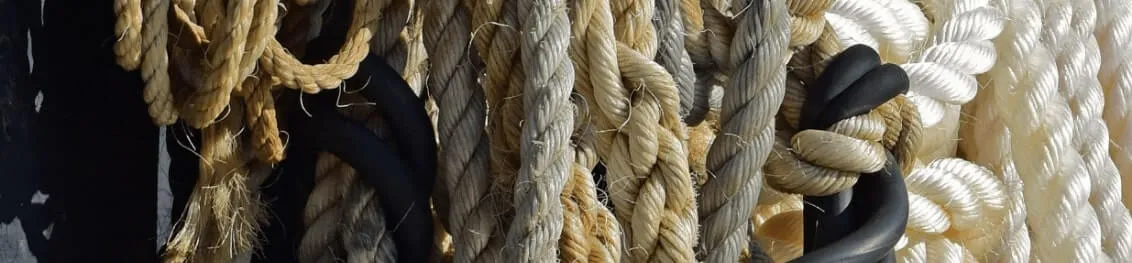
Searching for the right rope for your job can be overwhelming. Over the years, manufacturers have produced a variety of ropes for a variety of jobs. Each rope has unique strengths and weaknesses. Particular ropes are well suited for certain jobs and not others. Some ropes have a wide range of capabilities, but there is no "one size fits all" rope. Don't let the variety scare you. You need the right rope for your job. Here is a guide to some of the most common ropes including their strengths, weaknesses, and which one will be right for your situation.
If you happen to be looking for rope to build a net, we have an excellent guide to netting. The guide includes rope, webbing, and all purpose netting.
What Qualities Are You Looking For?
Dielectric/insulator
Floats
Water Resistant
Lightweight
Low Cost
UV Resistant
Snap Resistant
Smooth
Rot Resistant
Freeze Resistant
Flame Resistant
Chemical Resistant
Stretch Resistant
Cut Resistant
What Are You Using The Rope For?
Working Around Electric Lines
Marine Applications
Swimming Lane Barriers
Pulling
Decoration/Landscaping
Towing Lines
Anchor Lines
Pulleys
Tie-Down
Fall Protection
Mooring Lines
Helicopter Slings
Rescue Lines
Extreme Situations
Rope Material Properties and Use Cases
Polypropylene Rope
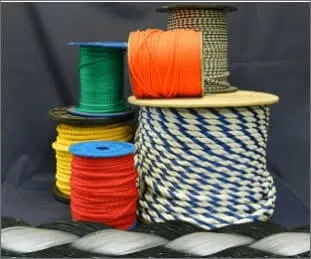
Polypropylene ropes are synthetic and possess a variety of unique qualities. Polypropylene rope is particularly suited for use around water and will not rot due to water and is resistant to mildew. This rope is also produced in a variety of colors making it a common choice for barriers at golf courses, parks or even power plants. Because polypropylene floats, it is used to designate swimming lanes in pools. Commercial fishermen commonly utilize this rope, especially in crab and lobster lines. It can also be used for buoy moorings, aquaculture, and net lines.
Dielectric/insulator, floats, water resistant, lightweight, low-cost, UV resistant, color variety.
Stretches (although this could be a positive), susceptible to friction.
Work around electric lines, marine applications, swimming-lane barriers.
Extraordinary Qualities
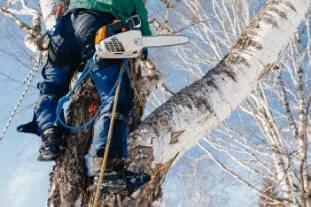
Dielectric ability is an important quality of polypropylene rope. Should this rope touch a live electrical wire it will not conduct the electric current. Because polypropylene rope acts as an insulator, electricians and tree workers who work around live electrical wires use polypropylene rope. When using this rope for hauling or hoisting, attention should be given to any abrasions against the rope as it can melt from friction. Polypropylene also lacks stretch memory. When stretched, it will not return to its normal size.
Manila Rope
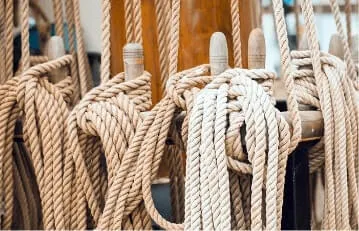
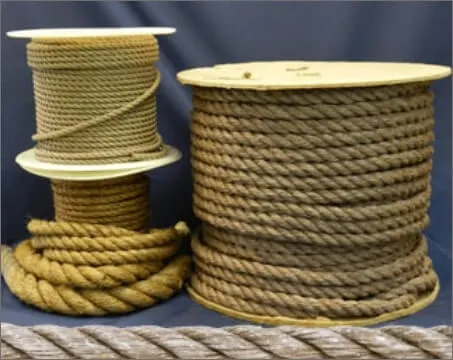
The natural strength and all around utility of manila rope has made it the standard for quality rope. Manila rope consists of all-natural hemp fibers. This creates aesthetic appeal commonly used for decorative fences or other landscaping purposes.
Because of susceptibility to liquid absorption and UV decay, the user should be careful of sustained tension on the rope especially when exposed to the elements. Manila's absorbing quality makes it the first choice for many physical activities that require direct handling of the rope. For purposes such as tug of war, climbing, obstacle courses, or stage rigging, manila rope absorbs perspiration providing better grip. This rope will not hazardously snap back when broken as other synthetic ropes may. For a quality natural rope that is aesthetically appealing and safe for active handling, manila rope is an excellent choice.
Visually appealing, snap-resistant, low-cost.
Not UV or water resistant, may harden or rot over long periods of time.
Pulling, decoration, landscaping, rigging.
Nylon Rope
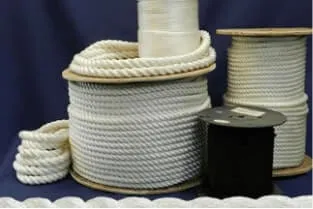
For superior strength and remarkable stretching capabilities, nylon is the rope of choice. Stronger than both manila and polypropylene, nylon commonly finds itself pulling the heaviest loads and bearing the most weight.
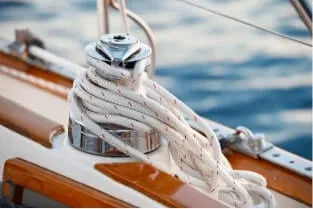
Having superior strength, nylon also maintains a smooth surface and its resistance to abrasion makes it ideal for pulley systems or winches. Also, different fall protection systems or rescue line assemblies are constructed from nylon rope. Within these applications, the strength and elasticity of nylon will be most beneficial.
Strong, smooth, abrasion resistant, UV resistant.
Absorbs water, weakens in water.
Towing lines, anchor lines, pulleys, winches, tie-downs, fall-protection systems.
Extraordinary Qualities
While both manila and polypropylene are susceptible to UV damage, nylon rope is resistant to UV, chemical exposure or any other form of rot. Despite the fact that water can weaken the strength of nylon, this effect is so slight that nylon is still commonly used for mooring lines and anchor lines. In fact, nylon rope is a great choice for any tie-down because of its strength, stretch, and sustenance in any environment. The all-around durability of nylon rope makes it useful for any job in any situation.
Polyester Rope
Polyester is considered by some to be the best general purpose rope. It's also one of the more popular choices when a tough heavy duty rope is needed.
Polyester rope is a great rope for general industrial applications as well as rigging applications. It does great in the outdoors and tough elements of nature. Can be seen being used for lines to tie down or hold back boats in marine applications.
A few uses for this rope may include: winches, dock rigging, blocking, or simple household applications. It can also be mistaken many times as Nylon with many fine details in differences. Largest difference being its resistance to chemicals.
Rot and UV resistant, retains strength when wet or dry and abrasion resistance.
Bright white color can become discolored and brown/green in marine applications.
Rigging, winches, general household uses.
Kevlar™ Rope
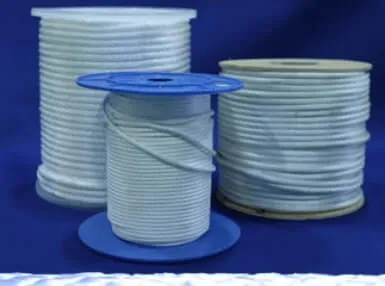
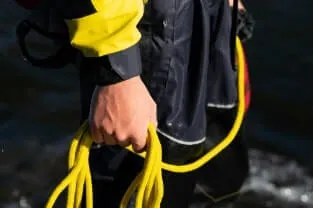
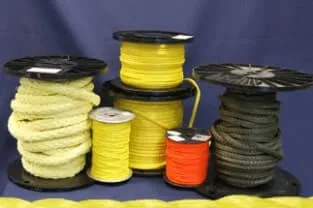
Few innovations in the past century have been as remarkable and useful as Kevlar™, invented in 1965 and produced by DuPont™. Among its many uses, Kevlar™ materials have been used for bullet-proof armor and flame resistant material. Kevlar™ rope is no less remarkable. Pound for pound, Kevlar™ rope is far stronger than steel and it will not rust. For this reason, Kevlar™ rope is used as mooring lines on oil rigs and ships. While nylon rope has certain elastic abilities, Kevlar™ rope has very low stretch, making it an excellent choice when complete stability is needed.
Strongest rope, freeze resistant, flame resistant, chemical resistant, water resistant, stretch resistant, cut resistant, UV Resistant Coating.
Not immune to damage.
Winch lines, mooring lines, helicopter slings, temperature extreme situations.
Extraordinary Qualities
Because of its polymeric properties, Kevlar™ material is susceptible to UV light and should not be permanently exposed to UV rays. Unlike any other rope, Kevlar™ rope is flame resistant. This rope can resist temperatures 500° F before it begins to weaken, and Kevlar™ will only strengthen when exposed to subzero temperatures.
One should be aware of any signs of wear on Kevlar™ rope, as the integrity of the rope can be more seriously compromised than the damage makes it appear. Kevlar's qualities are best demonstrated in extreme temperature conditions, or any time sheer strength is required.
View Material Specification Table
| Property | Manila | Nylon | Polyester | Polypropylene | Kevlar™ |
|---|---|---|---|---|---|
| Breaking Tenacity (g/denier) | 5.0-6.0 | 7.0-9.5 | 7.0-9.5 | 6.5 | 18-26.5 |
| Wet Strength vs Dry | Up to 120% | 85-90% | 100% | 100% | 95% |
| Shock-load Absorption | Poor | Excellent | Good | Very Good | Poor |
| Specific Gravity | 1.38 | 1.14 | 1.38 | 0.91 | 1.44 |
| Floats | No | No | No | Yes | No |
| Percent at Break | 10-12% | 18-25% | 12-15% | 15-25% | 1.5-3.6% |
| Creep (sustained load) | Very Low | Moderate | Low | High | Very Low |
| Water Absorption | Up to 100% | 2-8% | < 1% | None | 3.5-7.0% |
| Dielectric Properties | Very Poor | Poor | Good | Excellent | Poor |
| UV Resistance | Good | Good | Excellent | Poor | Fair |
| Rot/Mildew Resistance | Poor | Excellent | Excellent | Excellent | Excellent |
| Storage Requirements | Dry Only | Wet or Dry | Wet or Dry | Wet or Dry | Wet or Dry |
| Melts at | Chars at 350° | 420-480° | 490-500° | 330° | 800° decompose |
| Acid Resistance | Poor | Fair | Good | Good | Fair |
| Alkali Resistance | Poor | Very Good | Poor | Good | Fair |
| Oil/Gas Resistance | Poor | Very Good | Good | Good | Very Good |
* Kevlar data based on DuPont™ specifications
Styles of Rope
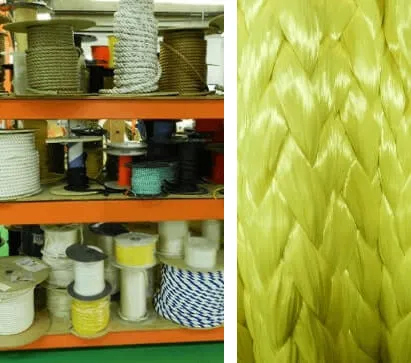
Ropes are not only made with a variety of materials (manila, polypropylene, nylon, Kevlar™, etc.), but any given rope can have different styles of braid or twist. Twisted rope appear in the form of a spiral and are created by twisting at least three strands of yarn in alternate directions. This alternation prevents the rope from unwinding, while also making it easy to splice. Because of the speed of their manufacturing, twisted ropes tend to be less expensive.
Braided ropes take on a rounded form and are generally smooth. This feature allows them to be used in high-friction situations like winches and pulleys. During the longer and more expensive process of braiding, several fibers pass above, below and around each other. This relatively recent innovation provides a rope that will not twist, but cannot be spliced.
Several different ways of braiding provide different qualities. Solid braid ropes are a complex braid that may have a filler core. They have high elongation but less strength. Diamond braids rotate fibers over and under one another in opposing directions. A filler is usually placed in the center of this rope giving it moderate strength. Double braided rope can actually be understood as a rope within a rope. One braid is formed over another braid to share the load evenly. Double braided rope is a favorite for boaters, but should be used with caution in manufacturing situations.
Words of Caution When Working with Rope
Use of Working Loads
Because of the wide range of rope use, rope condition, and exposure to the various factors affecting the rope, it is impossible to make blanket recommendations as to the correct choice of rope to use. However, we have provided the tensile strength for each diameter and type of rope. These strengths are based on tests of new and unused rope, with appropriate splices. Proper choice, care, and inspection of the rope are essential for reasonably safe use of the rope. Consult your cordage vendor for proper use.
Dynamic Loading Voids Normal Working Loads
Dynamic Loading occurs when rope is subjected to sudden or extreme stress. Figures given as working loads are void if rope has been subjected to dynamic loading, high temperatures, long periods of load, extreme stress, improper use, or storage.
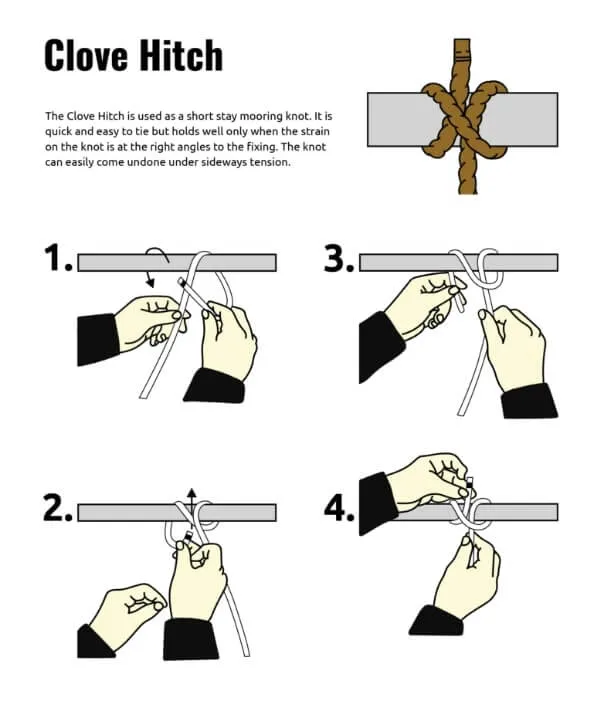
To lash, tie a clove hitch through each mesh.
This will prevent the rope from unraveling if it should become compromised.
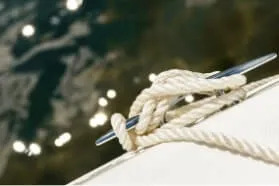
The clove hitch is used as a short stay mooring knot. It is quick and easy to tie but holds well only when the strain on the knot at right angles to the fixing. The knot can easily come undone under sideways tension.
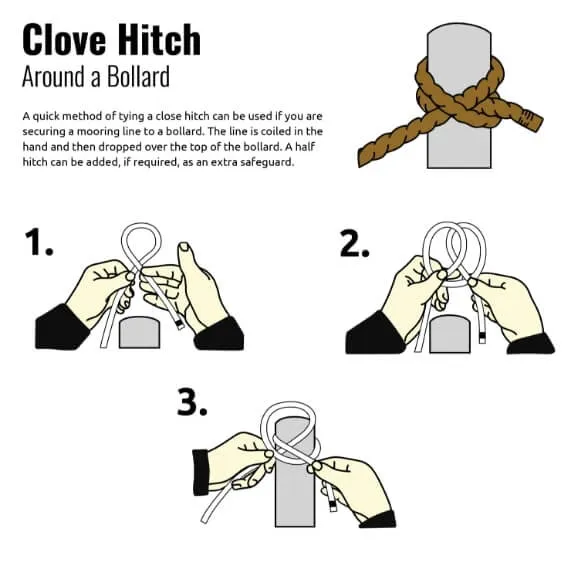
Clove hitch around a bollard
A quick method of tying a clove hitch can be used if you are securing a mooring line to a bollard. The line is coiled in the hand, as shown below, and then dropped over the top of the bollard. A half hitch can be added, if required, as an extra safeguard.
Effect of Temperature on Tensile Strength
The tensile strength charts apply to ropes tested at normal room temperature (70°F). Ropes have lower tensile strength at higher temperatures. Continued exposure at elevated temperatures causes permanent damage.
WARNING! MISUSE OF ROPES COULD RESULT IN SERIOUS INJURY
Rarely can you walk in to your local hardware store and find a full selection of rope types and sizes. Online stores like US Netting not only offer a full selection of all types and diameters of rope, but they will cut to length the rope you need! Matching the right rope to the right job will not only make the job easier, but it will also make the job safer.
Paul Galla, President
US Netting
https://www.usnetting.com
Knot Guide
Knots are handy things. For many people, knots play a crucial role in their work or recreation. They may even save a life! For connecting, lifting, securing or towing, you will need to learn the names of different knots, and when to use them.
Square Knot (AKA: Reef Knot)
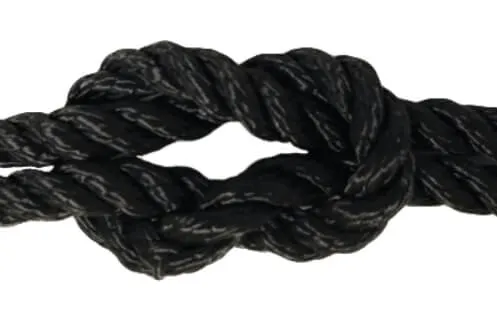
A very quick knot to tie, the square knot is used to join two ropes together in a simple and effective way. However, you should be aware that this knot is not reliable for heavy weights or critical situations. The square knot has been used for centuries to join two ends together for bandages or shoelaces or belts. The Boy Scouts require skill with this knot for general purposes.
- Fishing
- Hunting
- Lashing
- Boating
- Macrame
- General Use
Bowline Knot
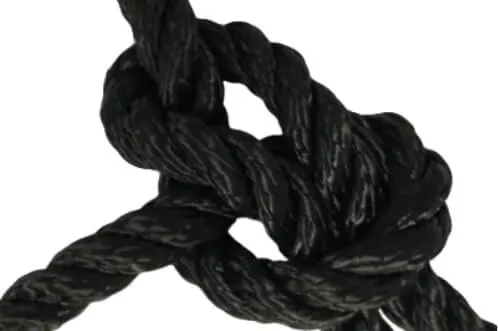
The bowline was originally used in a marine setting (as are many knots), but has proved itself useful in a wide range of situations. The qualities of this knot are its simplicity, strength and resistance to jamming. Because of the intentionally open loop in the completed knot, the bowline can be slung over a post or other object after it has been tied. This knot can also be tied after the rope has been passed through a ring. You should be cautious as the knot can become undone if it is shaken or jostled.
- Boating
- Safety
Overhand Knot
A simple knot with the most basic tying steps. Used mainly as a stopper in such applications like climbing ropes or to stop the rope from falling out of a pulley system.
- Basic Stopping
- Lashing rope ends
- Helps prevent fraying
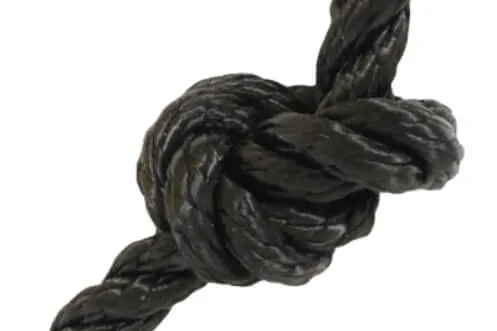
Slip Knot
The slip knot is used to slid and tighten around a post, tree, or hitch. This knot is great due to the fact that it tightens under loads. Many people also consider the slip knot as a noose. In this term it is not due to the way it is tied.
- Hunting
- Camping
- Temporary stopping or holding
- General use
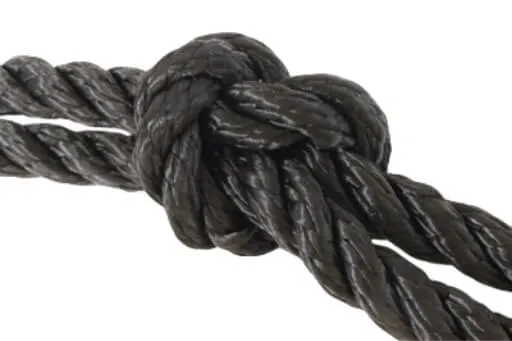
Sheet Bend (AKA: Weaver's Knot)
The Sheet bend is best used to join two ropes of unequal sizes. This is great for broken splices or just needing a few extra feet to pull down that branch.
- Hunting
- Camping
- Temporary stopping or holding
- General use
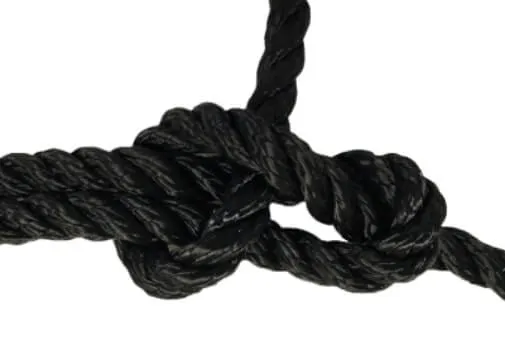
Tying It All Together
These are some of the more common knots used for work or play. An emergency situation is not the time to try to tie one of these knots. It is best to be prepared by practicing these knots before you need them. Many knot tying guides are available. Find one with good illustrations and practice with inexpensive rope or scraps. You will then have the confidence to take full advantage of rope and the many situations you are likely to encounter.
Paul Galla,
President USNetting.com