Learn to identify common damage types and when to remove slings from service.
Critical Safety Notice
Before using web slings, inspect the slings for any of the following damages. If the inner red safety core yarns become visible on ANY sling, remove them from service immediately.
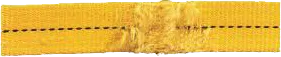
Can result from friction between the sling and an abrasive surface or from pulling the sling from under the load.

A cut is a clean break in the webbing resulting from contact with a sharp load edge. If inner red safety core yarns are visible, remove sling from service.

Acid or caustic vapors destroy the integrity of the nylon filaments. If slings show any sign of acid damage, promptly discard them.

Can result from sling overload. A frayed appearance at the failure point indicates this type of break. Never handle a load with an under capacity sling.

A sling exposed to heat above 194° Fahrenheit (90° Celsius) has lost its efficiency and should be removed from service.

Sharp objects can snag or puncture sling webbing. Due to the inability to determine the amount of sling loss on this type of damage, remove the sling from service.
Slings are designed to give service. We suggest that slings be stored on a rack designed specifically for this purpose. Regardless of the storage method used, slings should not be allowed to hang so that they drag on the ground. In addition your slings will last longer when they are not stored in an area that has acid fumes or is in direct sunlight. These conditions may adversely affect the life of your sling.
Store slings on racks designed specifically for this purpose.
Do not store in direct sunlight or UV exposure areas.
Keep away from areas with acid or caustic vapors.


 Safety Netting
  Barrier Netting
  Loading Dock Safety Nets
  Facility & Warehouse Safety
  Construction Safety Catalog
  Debris Netting Panels
  Fall Safety Netting
  Steel Netting
  Kevlar Reinforced Netting
  Conveyor Netting
  Drone Safety Netting
  Spectator Safety Products
  Transportation Safety Netting
  Plastic Fence
  Cargo Nets
  1" Webbing Cargo Net
  2" Webbing Cargo Net
  Custom Cargo Netting
  Cargo Netting Roll
  Military Grade Cargo Lifting Net
  Decorative Rope Cargo Net
  Truck Cargo Net
  Truck Cargo Net Kit
  Rope Cargo Net
  Steel Cargo Net
  Kevlar Reinforced Cargo Net
  Jumbo Lifting Nets
  Warehouse Cart Netting
  Pallet Rack Netting
  Debris Net Rolls
  Loading Dock Solutions
  Wall Mounted Loading Dock Nets
  Above-Ground Loading Dock Safety Nets
  In Ground Loading Dock Nets
  Existing Bollard Safety Nets™
  Construction Netting and Mesh
  Debris Netting Panels
  Fall Safety Netting
  Debris Netting Rolls
  Hatch Safety Netting
  Safety Barrier Netting
  Warehouse Safety Netting
  Hatch Netting
  Rack Safety Netting
  Loading Dock Solutions
  Military Netting
  Plastic Netting
  All Purpose Nets
  Barrier Netting
  Custom Barrier Netting
  EZ Barrier
  Knotless & Knotted Barrier Netting
  Sports Barrier Netting
  Warehouse & Dock Safety Barriers
  Pallet Rack Barrier Netting
  Sports Netting
  Custom Sports Netting
  Golf Netting, Barriers & Cages
  Baseball Netting & Cages
  Spectator Safety Products
  Camouflage Nets
  Drone Netting
  Gym Divider Curtains
  Lacrosse Backstops
  Agricultural & Pest Control Netting
  Shade Cloth
  Trellis Netting
  Crop Protection & Blueberry Netting
  Bird Netting
  Pond Netting
  Pest Control
  Poultry Netting
  Shade Cloth
  Square / Rectangular Shade Cloth
  Triangular Shade Cloth
  Metal Netting
  Steel Cable Netting
  Decorative Steel Netting
  Steel Chain Netting
  Conveyor Netting
  Light Duty Conveyor Netting
  Heavy Duty Conveyor Netting
  Heavy Duty Conveyor Netting w/ Debris Liner
  Plastic Fence Netting
  Multi-Use Plastic Fence
  Safety Barrier Fence
  Containment Netting
  Deer Fence
  Plastic Elk Fence
  Plastic Agricultural Netting
  Plastic Pallet Rack Netting
  Plastic Bird Netting
  Plastic Poultry Netting
  Plastic Snow Fence